The Golden Gate Bridge, Explained
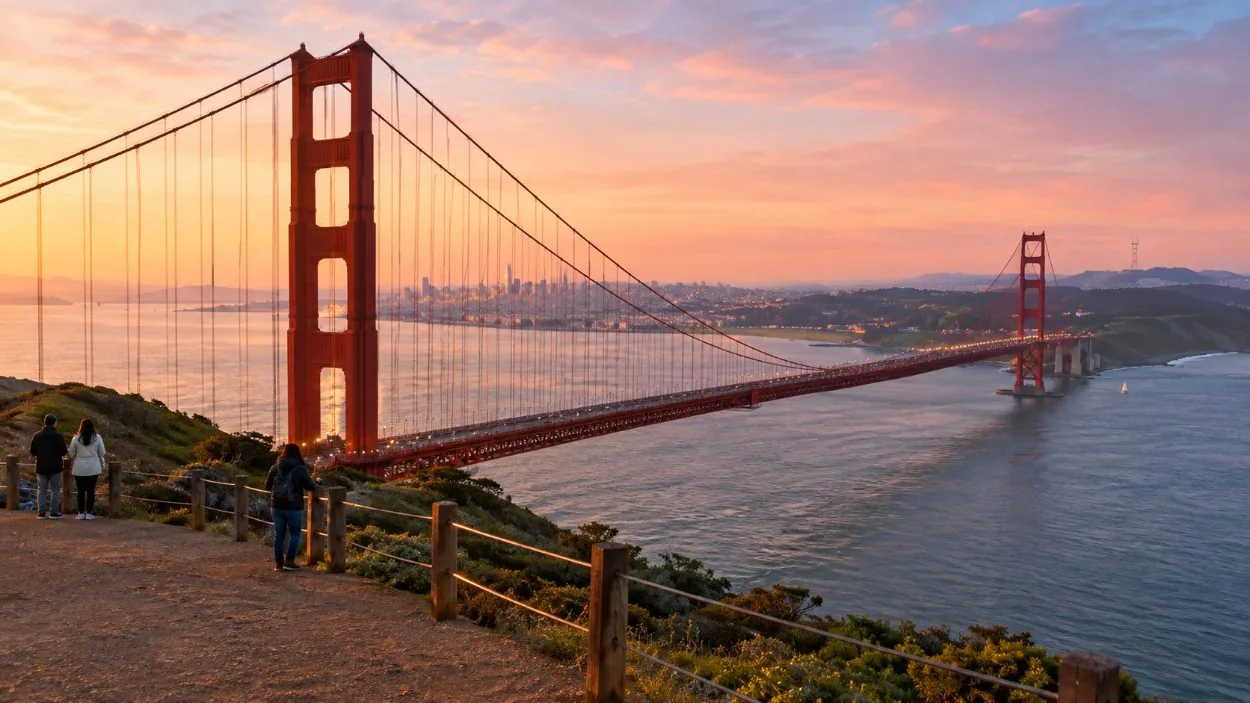
I grew up a mile from the south tower and spent six summers on a bike-rental counter at Fisherman’s Wharf, so I know which questions get asked about this bridge at nine in the morning. The short answers are below; the long ones are on the pages they link to.
What the bridge is
The Golden Gate Bridge is a suspension bridge across the Golden Gate strait, the mouth of San Francisco Bay, joining San Francisco on the south to Marin County on the north. It is 1.7 miles long including the approaches, the main span between the towers is 4,200 ft, the towers stand 746 ft above the water, and the deck clears the water by 220 ft at mid-span. It opened to walkers on 27 May 1937 and to cars the next day, when President Franklin D. Roosevelt pressed a telegraph key in the White House, and it is still owned and run by a public agency, the Golden Gate Bridge, Highway and Transportation District, not by the city.
The free walk, and its rules
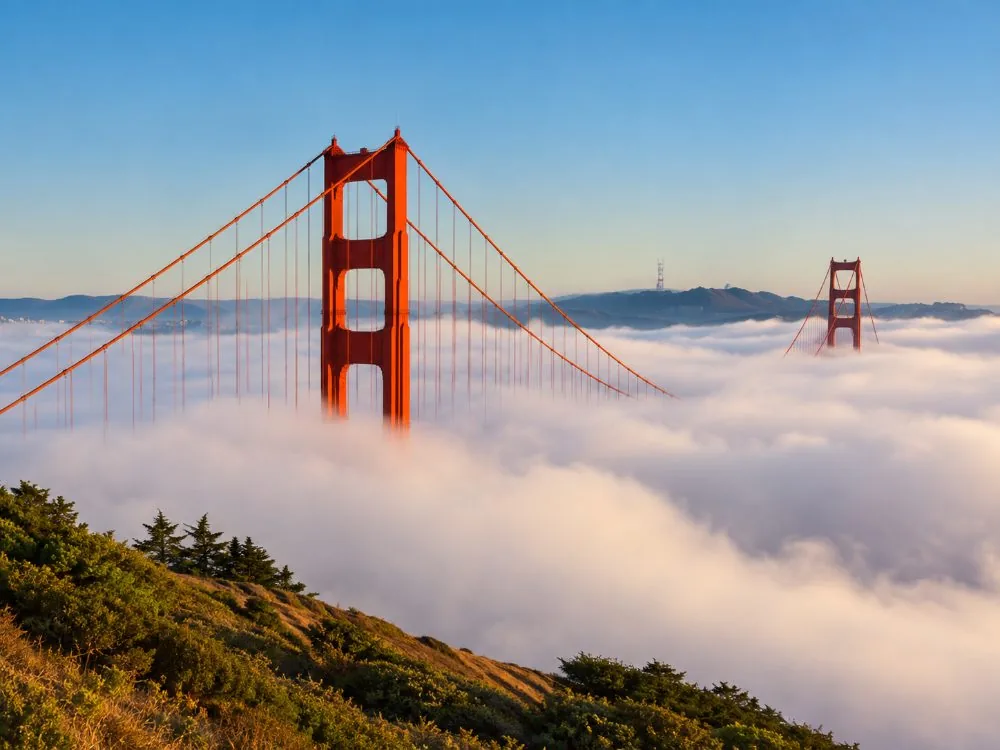
Walking across costs nothing. There is no ticket and no booking, and the only money the bridge ever asks for is a car toll on southbound crossings, collected electronically with no booth and no cash. Pedestrians use the east sidewalk, the side facing the city and the bay. Its gates close automatically at 6:30 pm in winter and 9:00 pm in summer and reopen at 5:00 am; the west sidewalk is for bicycles. The crossing is 1.7 miles. The Presidio Trust says about 35 minutes at a steady walk, and most people I sold maps to took 45 to 60 minutes each way once they stopped at the towers. It is windier and colder on the deck than it was in the car park, so carry a layer that zips. Dogs other than service animals, e-scooters, skateboards, roller skates and drones are not allowed. The full rulebook is on the walking page, and the sidewalk question has its own short answer.
Under, across, over
Nothing on GetYourGuide sells the bridge, because the bridge is free. What the six tours sell is an altitude, and the way to choose is to weigh what each one shows you that the walk does not.
Under. Three boats leave Fisherman’s Wharf and pass beneath the deck, 220 ft overhead, which is the one angle a walker never gets. The one-hour bay cruise from Pier 43½ is the plain version, with a handset audio guide in 16 languages; the 90-minute bridge to bridge cruise adds the Bay Bridge at the other end of the loop; the catamaran from Pier 39 does it under sail, with the crew talking instead of a handset.
Across. Two guided bike tours ride the deck itself, then drop downhill into Sausalito, where you take the ferry back with the bike. You could ride the route alone, but there is no bike rental at the bridge, and the guide handles the sidewalk rotation, the Presidio climb and the timing of the ferry for you. Both start at Fisherman’s Wharf and run about three hours.
Over. One seaplane, 30 minutes, six seats and every one of them a window, taking off from the water at Mill Valley on the Marin side. It is the only tour here that is non-refundable once booked, and a weather postponement is at the pilot’s discretion.
The walk competes with all six and it wins on cost. The tours win on the underside of the deck, on Sausalito, and on seeing the whole strait in one look.
Three things people get wrong
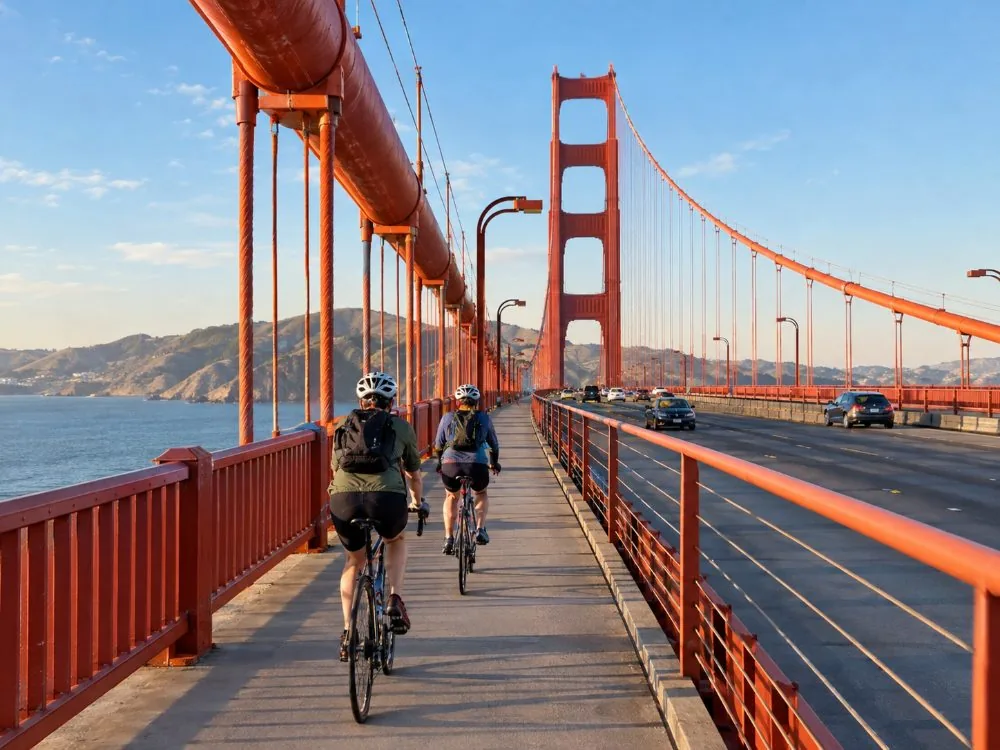
The name belongs to the strait, not the bridge. John C. Frémont called the entrance to the bay Chrysopylae, Golden Gate, in 1846, after the Golden Horn of Constantinople, and the bridge took the name ninety years later. The paint is not gold either; it is International Orange, chosen by the consulting architect Irving Morrow. The bridge is on the American Society of Civil Engineers’ list of Wonders of the Modern World and it is not one of the New7Wonders, which are Petra, Machu Picchu, the Great Wall, Chichén Itzá, Christ the Redeemer, the Colosseum and the Taj Mahal. And Golden Gate Park is a different place three miles to the south, a free park with paid museums inside it. Longer answers: the name, the wonders lists and park versus bridge.
How I would spend one morning
Take the Muni 28 to the stop by the Welcome Center, which opens at 9:00 am, and look at the 12-foot steel test tower from 1933 while the fog decides what it is doing. Walk out on the east sidewalk as far as the south tower, or the whole 1.7 miles to Vista Point if the wind is kind, and come back the same way. In summer the deck is often in cloud until late morning, so the early hours are for the walk and the clear ones are for the water. Then go down to Fort Point, the brick fort directly under the south end, for the view from underneath, and on to Fisherman’s Wharf for an afternoon bay cruise from Pier 43½, which puts you under the deck you stood on an hour earlier. On a Wednesday or a Saturday, San Francisco City Guides run a free walking tour from the Strauss statue that ends at the south tower. September and October give you the best odds of seeing the towers at all, and a Tuesday or a Wednesday gives you the emptiest sidewalk. Over is thirty minutes and a shuttle from the Wharf, and it is the one I would save for a clear afternoon.
Ready to see it from the water?
The one-hour bay cruise from Pier 43½ passes under the deck and around Alcatraz, with an audio guide in 16 languages. Check live departure times below.
Frequently asked questions
Do I need a ticket to visit the Golden Gate Bridge?
No. Walking and cycling across are free and need no booking. Tickets only come into it if you want to see the bridge from a boat, join a guided ride or take the seaplane.
How long should I plan for the bridge?
Allow 45 to 60 minutes each way on foot with photo stops, plus time at the Welcome Center and the viewpoints. A cruise adds one to one and a half hours; the guided bike tours run about three hours to Sausalito. See the walking page.
Which is better, walking or a cruise?
They show different things. The walk gives you the deck, the cables and the wind; the cruise gives you the underside and the towers from 220 feet below. Most people with half a day do both. The trade-offs are on cruise or bike and is it worth it.